Where to start
A house can't outrun its market
Most deals get analyzed backwards. You find a property, the spreadsheet looks clean, and only then do you ask whether the surrounding market can hold the rent you penciled in. By that point you're committed and the analysis bends to fit. These guides run the other direction: judge the market first, cheaply, and let it decide whether any house there is worth a full underwrite.
01
Size up the market
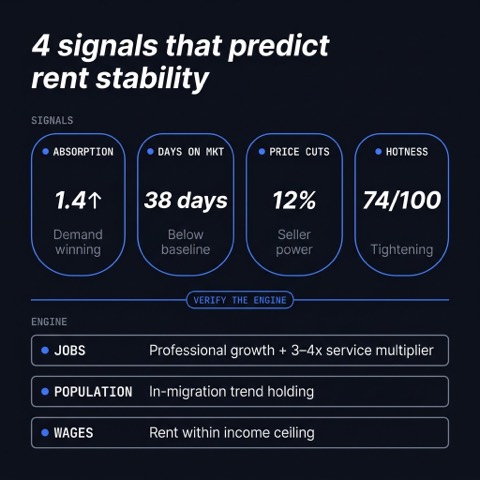
Read demand against supply with four signals, then check the jobs, migration and income underneath them. An hour's work that kills most markets before you waste a weekend on one.
02
Decide how it makes money
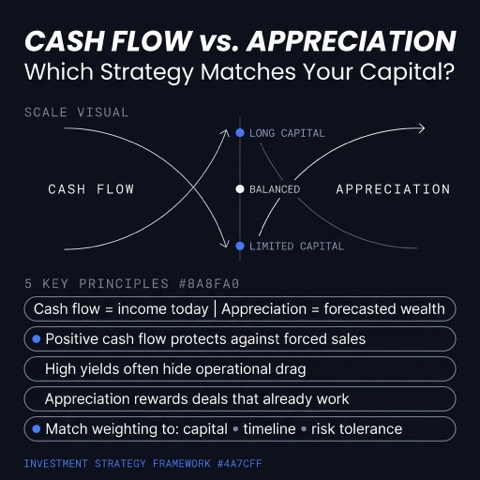
Cash flow and appreciation pull in opposite directions. Pick one deliberately, and learn to recognize which kind of market you're actually standing in.
03
Buy, watch, or walk
Turn the read into a verdict, with the threshold written down before you're emotionally committed to the deal.
04
Build the portfolio
Go from a few doors to a real portfolio without outrunning the systems holding it up, including in markets you'll never drive through.
Size up the market
The signals that tell you whether demand is beating supply — and the jobs, people and wages that have to exist underneath them for rent to hold.
Decide how it makes money
Cash flow and appreciation want different markets. These make the trade-off explicit, then test whether a specific strategy fits the one in front of you.
Buy, watch, or walk
Signals are inputs. This is the rule that turns them into a decision.

Build the portfolio
The operating side. How a portfolio gets built without outrunning the systems holding it together.